Production-ready managed infra
Continuous cloud optimization
Hybrid & multi-cloud networking
Security & compliance polices
AWS, Azure, Google Cloud, and more
IaC Terraform multi-cloud plugin
DevOps, CI/CD, analytics, and more
Lambda, S3, Blob, AKS, and more
Provision & manage VMs on any cloud
Low-cost and fault-tolerant workloads
Deploy & run clusters on any cloud
Improved cloud resource efficiency
Boost performance with cloud-native
Overcome legacy & tech challenges
Deliver cloud solutions to customers
Migrate data, apps, and workloads
Stay informed with our latest articles
Industry research and white papers
Upcoming events, talks and summits
Technical docs, SDK, API, and tutorials
Explore insights and strategies from our cloud experts to help you tame your cloud environments – and your cloud bills.
If your cloud bill is a mess, here's what you can do right now
Understanding and implementing cost optimization capabilities across all your cloud environments.
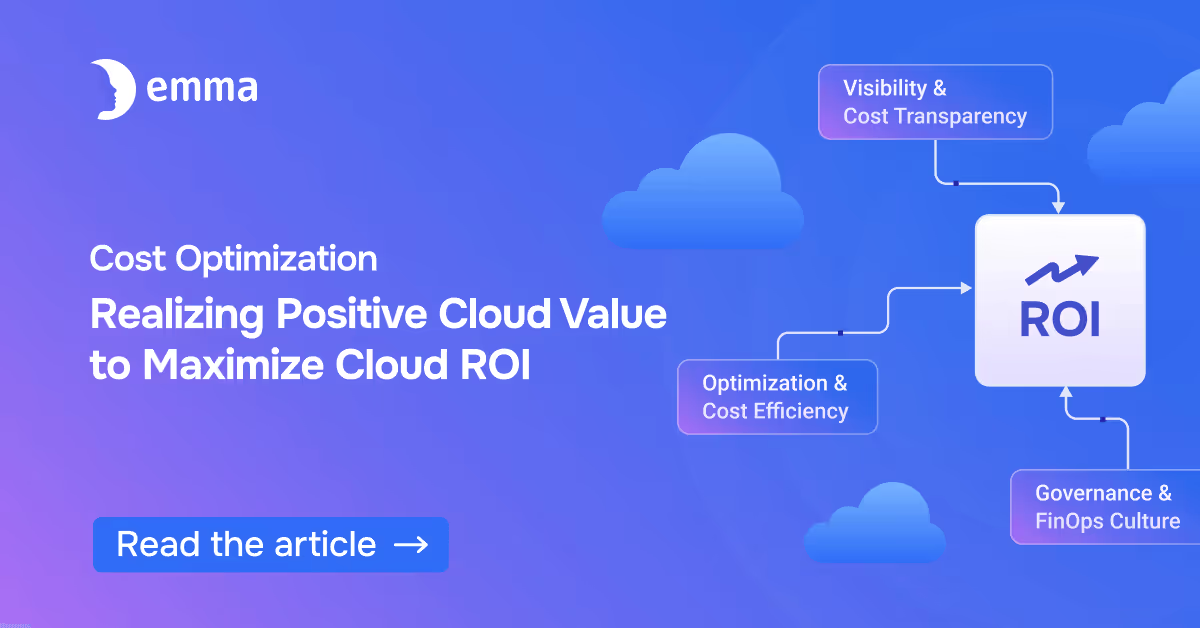
Go beyond basic cost reduction to enable true value realization for your cloud investments.
emma steps up to join OCC alongside other innovators and business leaders
Cloud adoption is continuing to grow – and so are cloud costs. Here are some ways to optimize cloud costs for your business.
Instead of a reactive approach to cost cutting, here’s how to find a proactive approach to value realization.
CISPE has promised bold and innovative commitments to promote distributed, multi-cloud, open-source solutions in an effort to enhance competition.
Some of the most critical lessons from DeepSeek’s playbook – efficiency, optimization, and democratization – failed to land a spot for the greater industry’s reflection.
Today, 89% of companies have adopted hybrid or multi-cloud strategies. What are hybrid and multi-cloud exactly? Continue reading to find out.
The cloud fundamentally transforms how we build and run applications, from cloud-native to cloud-based to cloud-enabled.
More than 60% of organizations believe they are not fully realizing the cost benefits they had anticipated.
Find out our top picks for hybrid cloud solutions: key offerings, strengths, and specialities to help you choose the best-suited hybrid cloud solution.
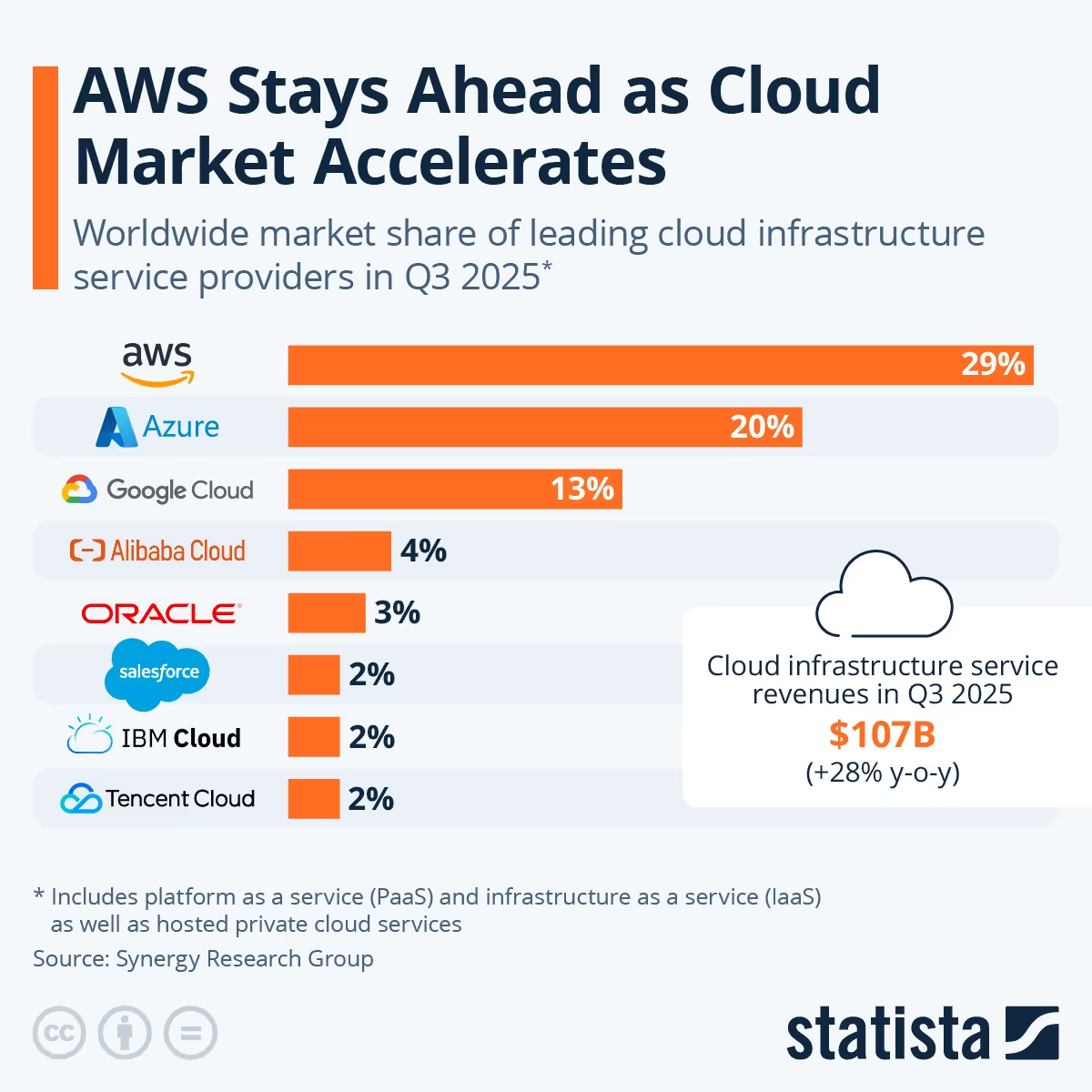
Find out the latest global market share numbers and trends for major cloud providers, including AWS, Azure, GCP, Alibaba, Oracle, IBM, and more.
Learn how to choose the best cloud service provider based on factors like cost, compatibility, performance, and reliability.
A comprehensive guide for IT decision-makers to evaluate and choose the best cloud computing service providers for cost-effectiveness, scalability, and reliability.
As organizations continue to adopt cloud computing at scale, managing resources effectively in the cloud becomes an increasingly difficult task.
As organizations adopt multi-cloud—encompassing a mix of on-premise, private, and public clouds—the limitations of traditional FinOps tools become increasingly apparent.
In today’s fast-paced enterprise environments, developer productivity and rapid innovation are more critical than ever. However, their productivity should not come at the cost of operational efficiency or overall business value.
Cloud repatriation is not merely a step backward but can be strategically integrated into a cloud-agnostic multicloud approach.
As the digital transformation journey continues to reshape industries, the importance of robust and agile networking solutions has become more evident than ever.
Not all Kubernetes services are equal, much less within the multicloud models.
The Mobile World Congress 2024 provided a platform for thought-provoking discussions and insights into the evolving landscape of cloud computing.
With over 800 telecom service providers competing for their slice of the pie, they will each have to invest over $200 million per year on average to achieve this level of digital transformation.
As Google rightly points out, egress is not the main deterrent to data and infrastructure migration.

.avif)
.avif)

.avif)
%20(1).avif)