GPU-powered K8s clusters. Three clouds. Under five minutes.
Fully managed Kubernetes clusters with GPU node pools across AWS, Azure, and GCP. Pre-validated CUDA images. Centralized cost and utilization dashboards. Same governance as every other resource on the platform.


Distributed model training
Run multi-node training jobs across GPU node pools. Kubernetes handles scheduling and orchestration. emma handles governance, cost attribution, and cross-cloud networking.
Scalable inference serving
Deploy model-serving containers on GPU-backed nodes. Kubernetes manages pod lifecycle. emma provides the governed cluster, CUDA images, and integrated monitoring.
ML pipeline orchestration
Run Kubeflow, MLflow, or Argo Workflows on GPU clusters. Your ML teams keep their frameworks. emma provides the managed infrastructure underneath — no cluster ops required.
GPU-accelerated data engineering
RAPIDS, Spark on GPU, or custom data pipelines on Kubernetes. Provision GPU node pools for the job, scale down when complete. Cost attributed per team and project.
EKS, AKS, and GKE each have their own GPU node pool configuration, driver management, and cost tooling. emma manages the cluster lifecycle across all three — so your platform team manages policy, not infrastructure.
Provision in under 5 minutes
GPU-enabled managed K8s (mk8s) clusters via UI or CLI. No node pool configuration, no driver installation, no scheduler tuning. Cluster is production-ready from first provision.
Pre-validated CUDA images
GPU container images ship with the correct CUDA toolkit and driver versions. No compatibility debugging. Your ML containers run on first deployment.
Multi-cloud by default
Run GPU clusters on AWS, Azure, or GCP from one interface. Choose the provider that fits each workload — without learning three different cluster management consoles.
Governed like everything else
GPU K8s clusters inherit the same RBAC, tagging, and policy standards as all other emma resources. No separate compliance surface for Kubernetes GPU workloads.
Integrated GPU monitoring
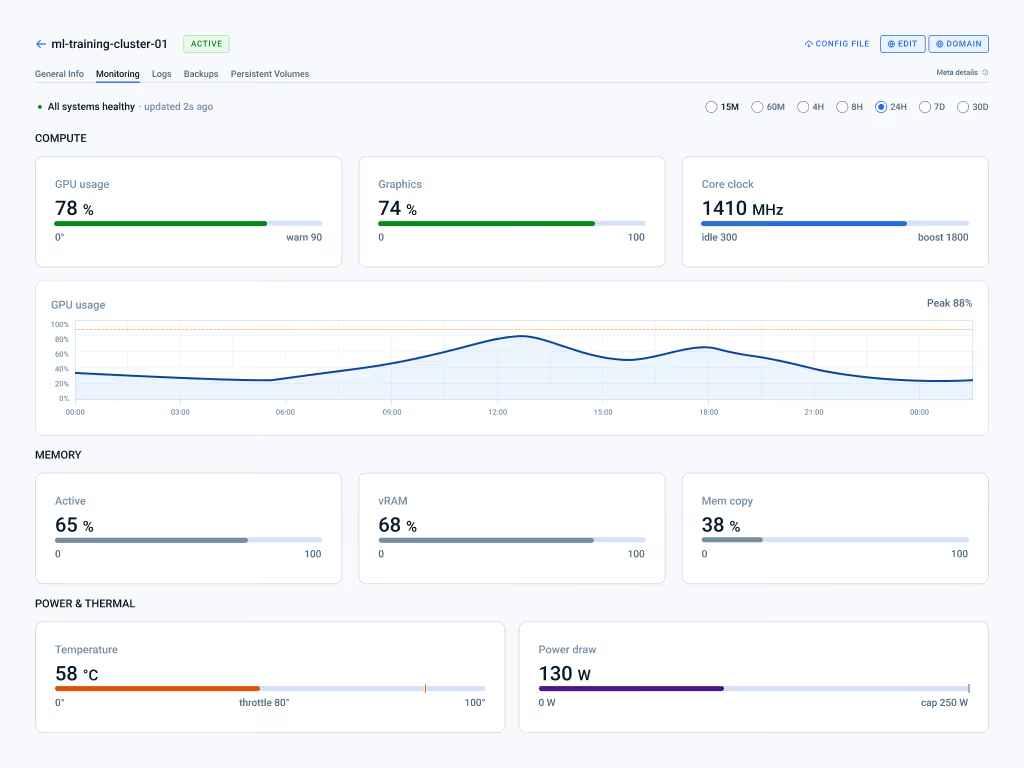
GPU metrics at the cluster level — utilization, memory, power, temperature, clock speed. Visible in the mk8s monitoring tab. No agents. No DCGM exporters. Zero setup.
Cost per team and project
Centralized cost dashboards per cluster, project, and team. GPU spend attributed regardless of which provider the cluster runs on. One cost view for all GPU K8s.
Configure
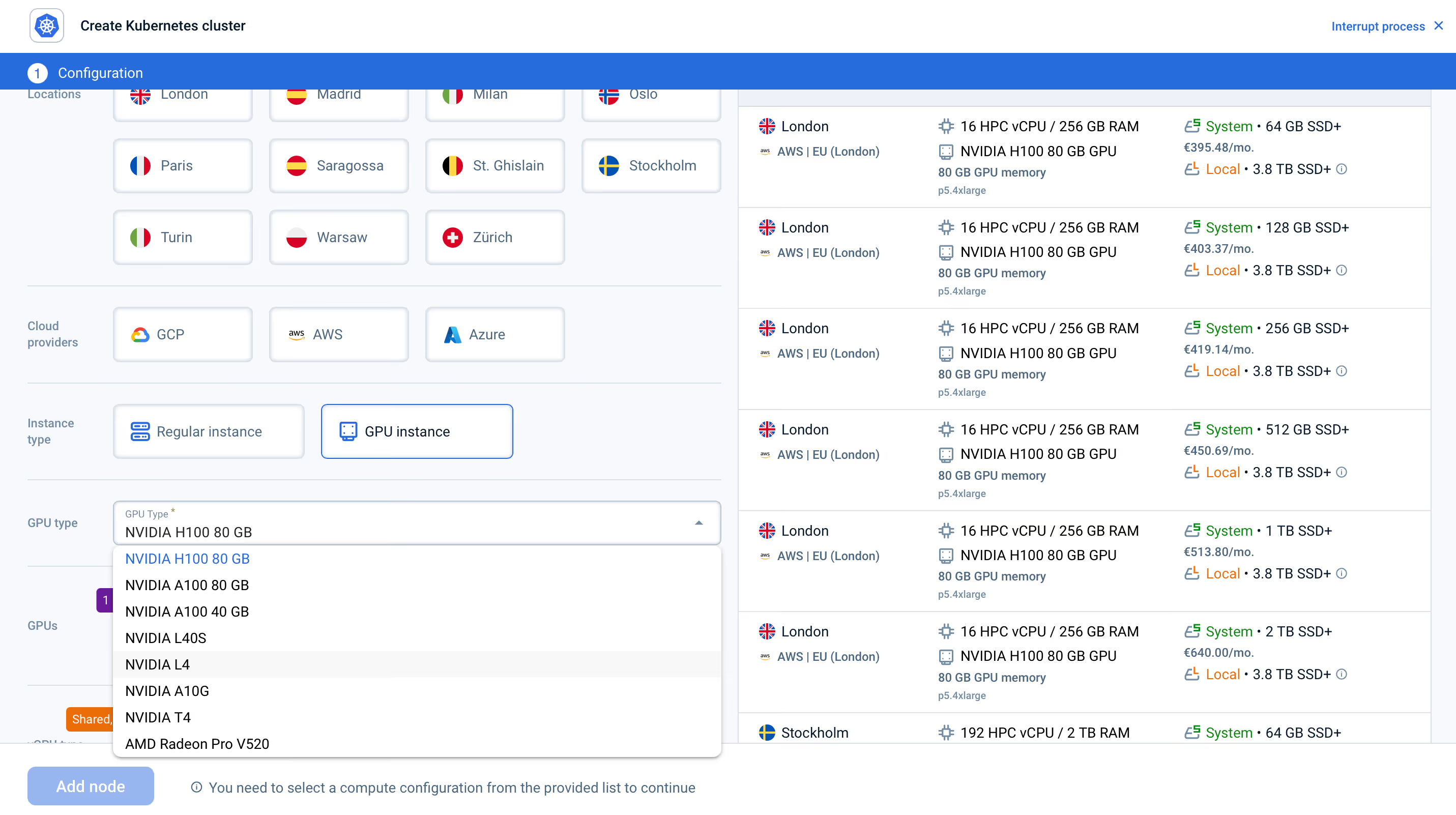
Choose provider (AWS, Azure, or GCP), region, GPU type, and node count in the emma UI or CLI.
Provision
emma provisions the managed cluster with GPU node pools and pre-validated CUDA images. Under 5 minutes.
Deploy
Deploy your containers. Kubernetes handles scheduling. GPU monitoring appears automatically for GPU-backed nodes.
Govern
RBAC and tagging enforced. Cost attributed per team. GPU metrics in the monitoring tab. Audit trail per lifecycle event.
AWS (EKS)
Broad GPU instance selection. Global regions. Mature ecosystem for teams already running EKS.
Azure (AKS)
Enterprise compliance integration. Hybrid connectivity. Familiar for Microsoft-stack teams.
Google Cloud (GKE)
Strong ML tooling. Tight integration with Vertex AI ecosystem. Competitive spot pricing for GPU nodes.
No cluster ops required
emma manages the control plane, node pool lifecycle, and GPU driver compatibility. Your team focuses on deploying workloads — not maintaining cluster infrastructure.
- •Managed control plane across all three providers
- •GPU node pools provisioned with validated drivers
- •No scheduler tuning or NVIDIA plugin configuration
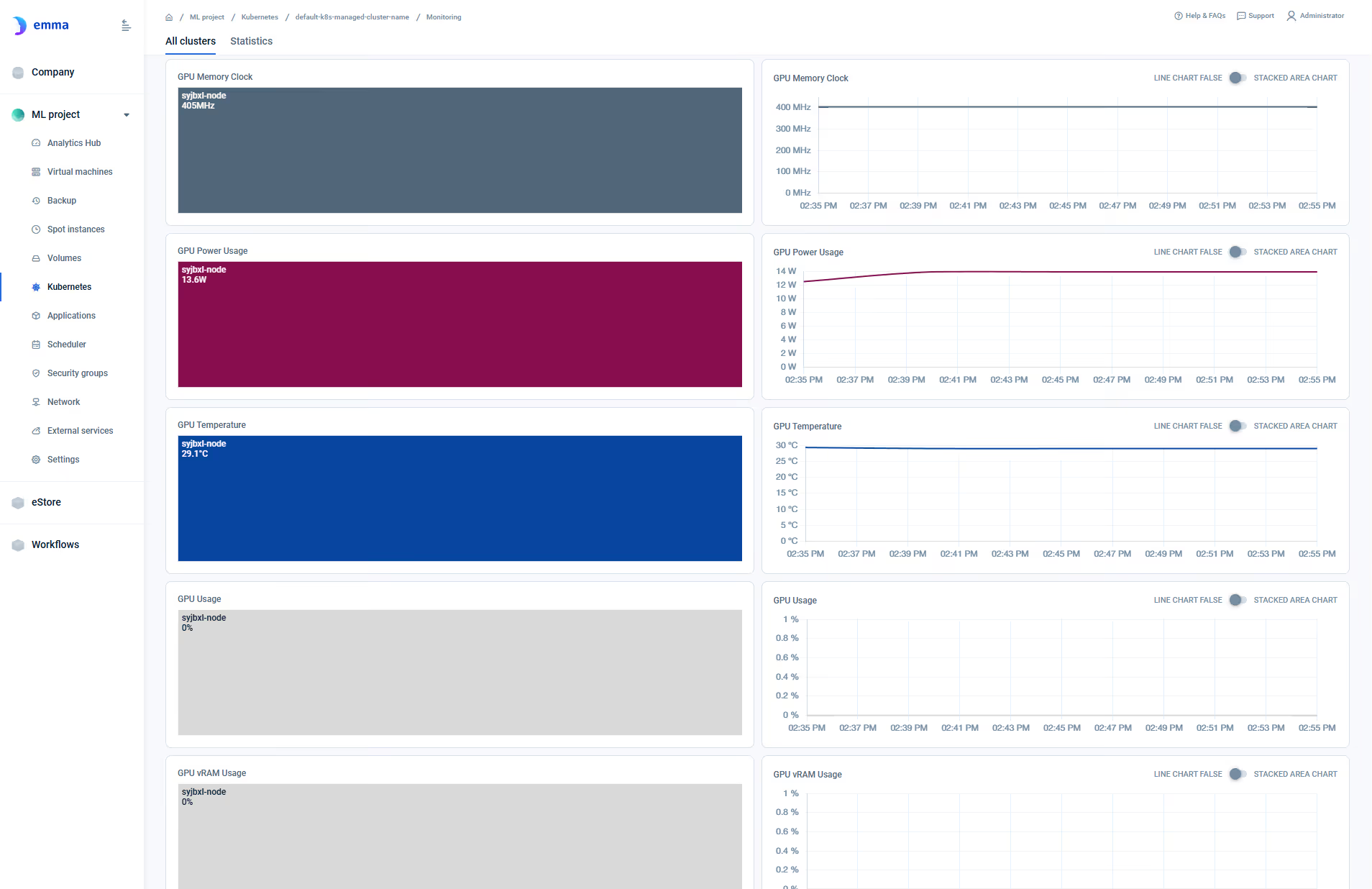
GPU monitoring at the cluster level
GPU metrics appear automatically in the mk8s monitoring tab for any GPU-backed node. No agents. No DCGM exporters. No Prometheus configuration.
- •GPU Usage, Graphics Usage, Active Memory, VRAM
- •Memory Clock, Core Clock, Memory Copy
- •Power Usage and Temperature
Your frameworks. Our infrastructure.
emma doesn't replace your ML tooling. PyTorch, TensorFlow, Kubeflow, MLflow, Argo, Hugging Face — they all run on emma's managed GPU K8s clusters. We handle the infrastructure layer: Standard Kubernetes API — no proprietary abstractions. Bring your own Helm charts, operators, and CI/CD. No vendor lock-in — clusters run on standard EKS, AKS, GKE.
| Capability | AWS EKS | Azure AKS | GCP GKE | emma mk8s |
|---|---|---|---|---|
| Cross-cloud unified console | Single cloud | Single cloud | Single cloud | AWS + Azure + GCP |
| Pre-validated GPU/CUDA images | Partial | Partial | Partial | Yes |
| Cost per team/project | Cloud-native only | Cloud-native only | Cloud-native only | Unified dashboard |
| Governance unified with other workloads | IAM only | IAM only | IAM only | Same policy layer |
| Vendor lock-in risk | High | High | High | Low — multi-cloud |
“Previously, this was a multi-step, manual process involving multiple engineers. With emma, we can now deploy production-ready clusters with pre-configured networking, storage, and monitoring — all through a single automated workflow.”